music house of Isfahan
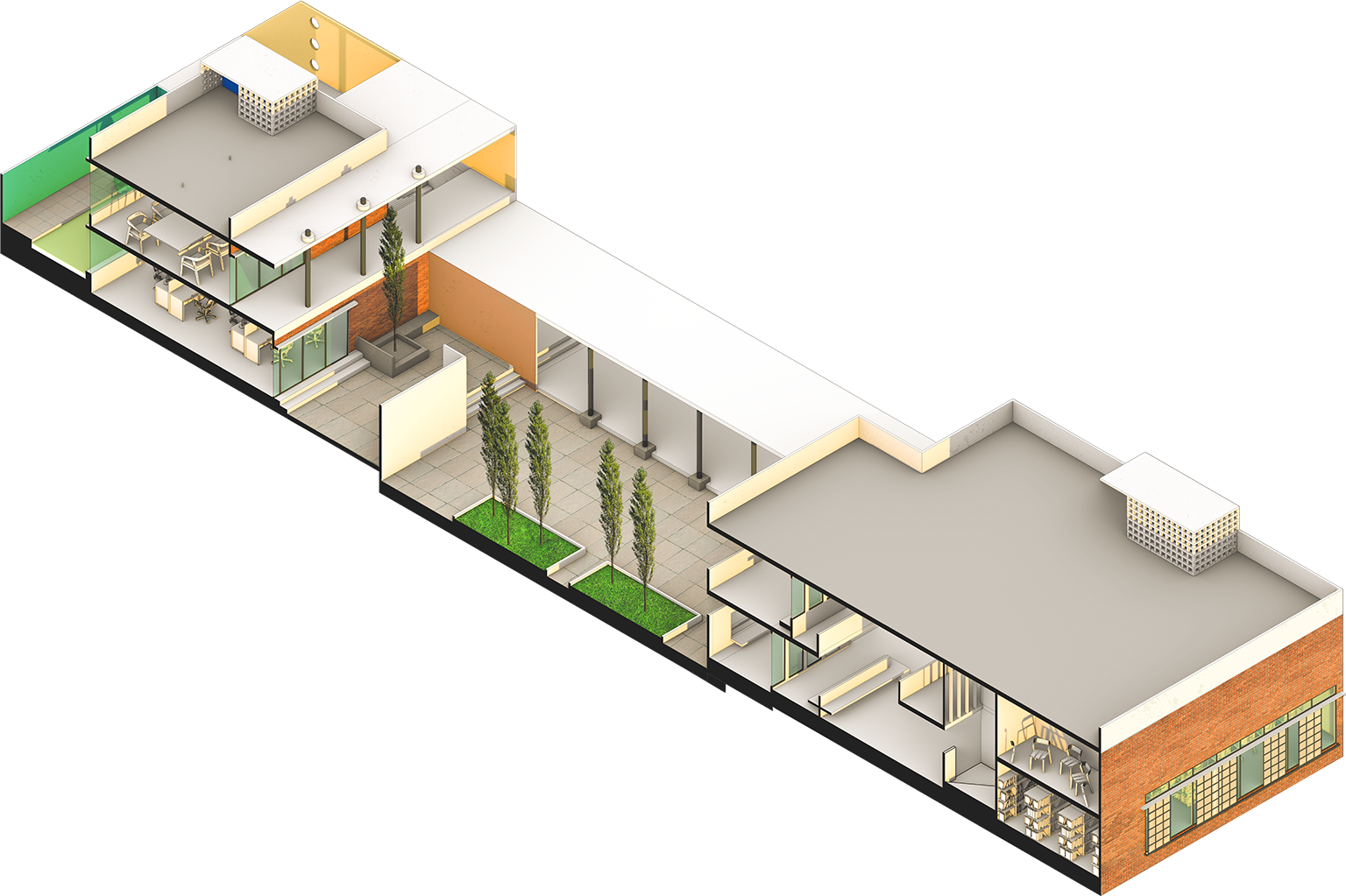
The “Music House of Isfahan” focuses on the idea of a house, drawing parallels to the architectural essence of Iranian traditional music. It serves as a hub for both music enthusiasts and performers, offering flexible spaces for solitary reflection or social interaction. These spaces allow users to decide how they want to engage, whether it’s sitting, performing, socializing, or simply being present.
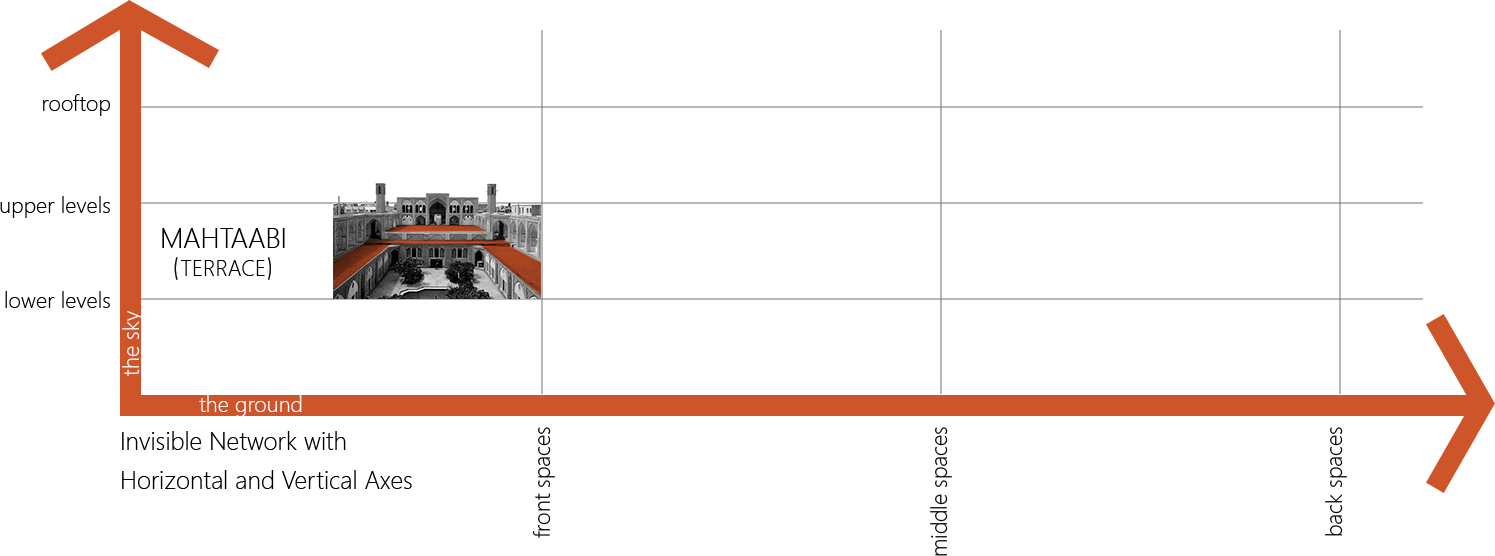
The design aims to bridge the gap between architecture and music, mirroring the layered structure of Iranian music in organizing spaces to facilitate diverse experiences. It’s crucial to emphasize that this approach isn’t about directly translating musical elements into architectural forms, but rather about uncovering the stories within these models and using them to define innovative spaces.
Radif
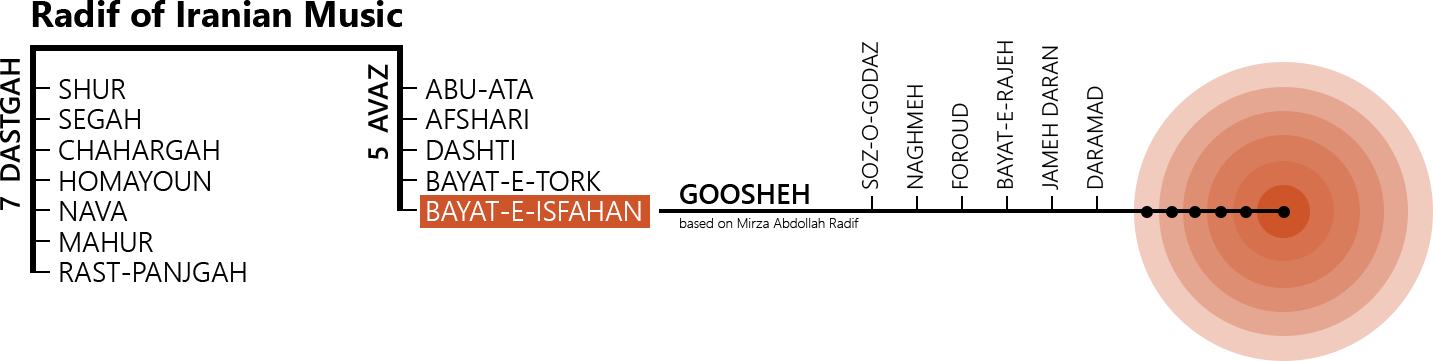
The Radif of Iranian music is like a book containing a collection of articles, each one consisting of an introduction, main content, poems and proverbs, and a conclusion. Basically, the Radif organizes a collection of very old melodic figures (Goosheh), which are preserved by oral traditions through many generations, into a number of different tonal spaces called Dastgah. The Radif of Iranian music consists of exactly 7 Dastgahs (large articles) and 5 Avazes (small articles), each with its own hierarchy.
Modaal quality
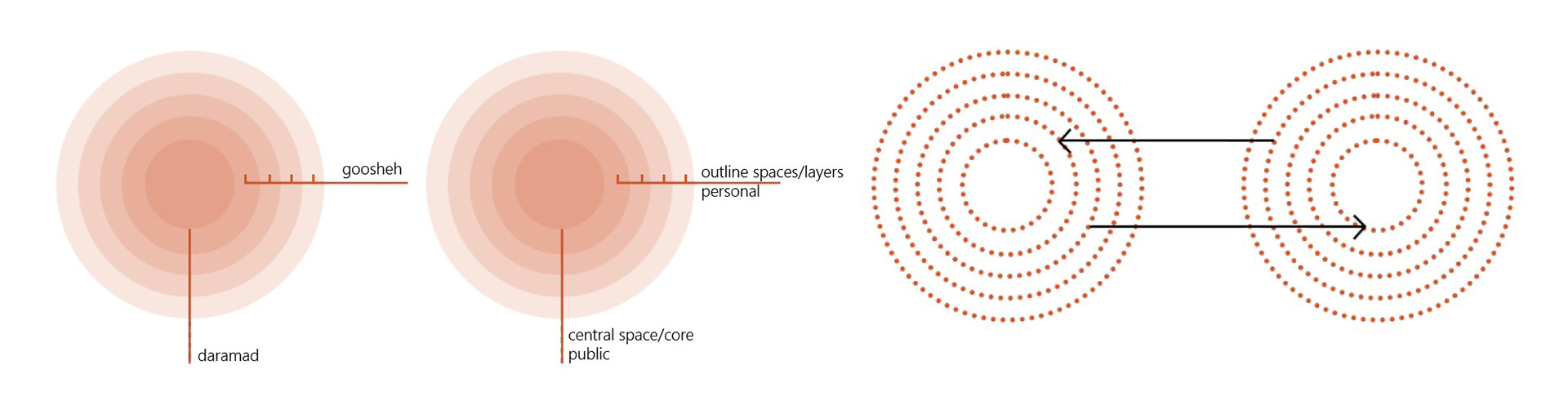
An example of the movement between the layers called Goosheh in Iranian music is the modal quality or Morakkab Khaani. This occurs when a vocalist or musician performing in a particular Dastgah bridges to another Goosheh in a different Dastgah. They do so through a special Goosheh in the former Dastgah that provides the opportunity for this transition.
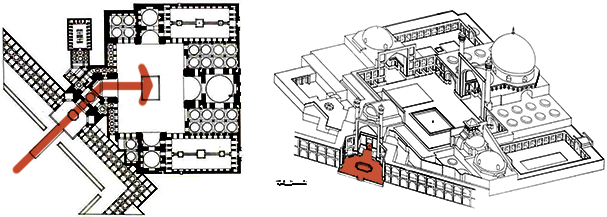
In architecture, we can observe a similar type of movement between spatial layers in the Shah Mosque of Isfahan, where its passageway (Dalaan) rotates 45 degrees from the entrance and connects to the mosque's courtyard.
Site analysis
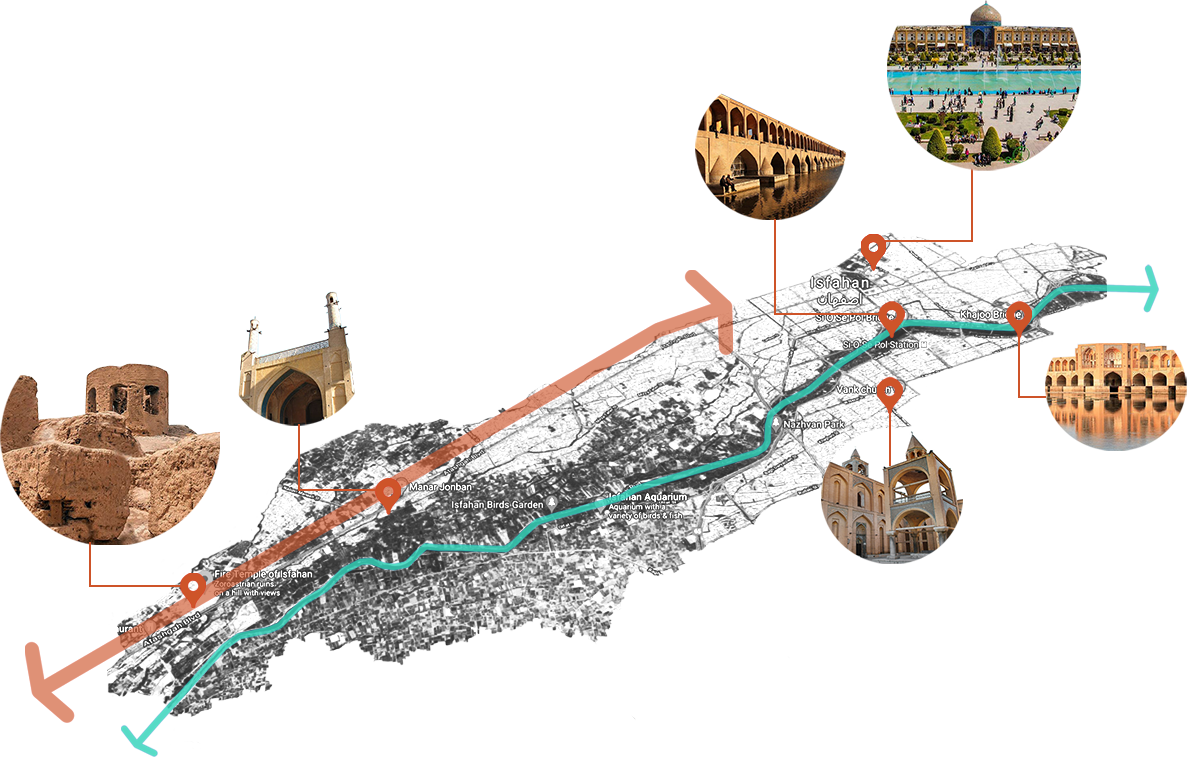
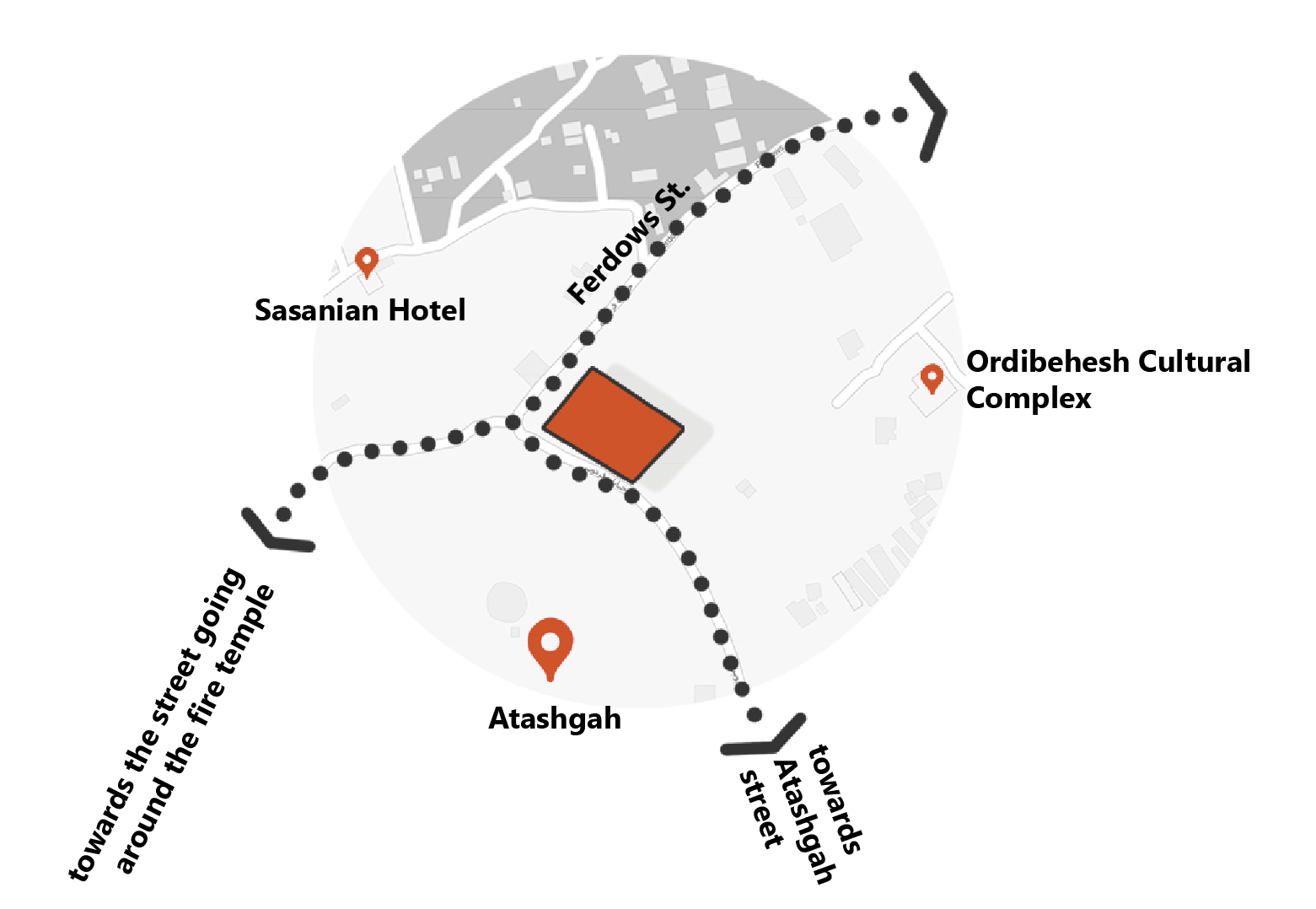
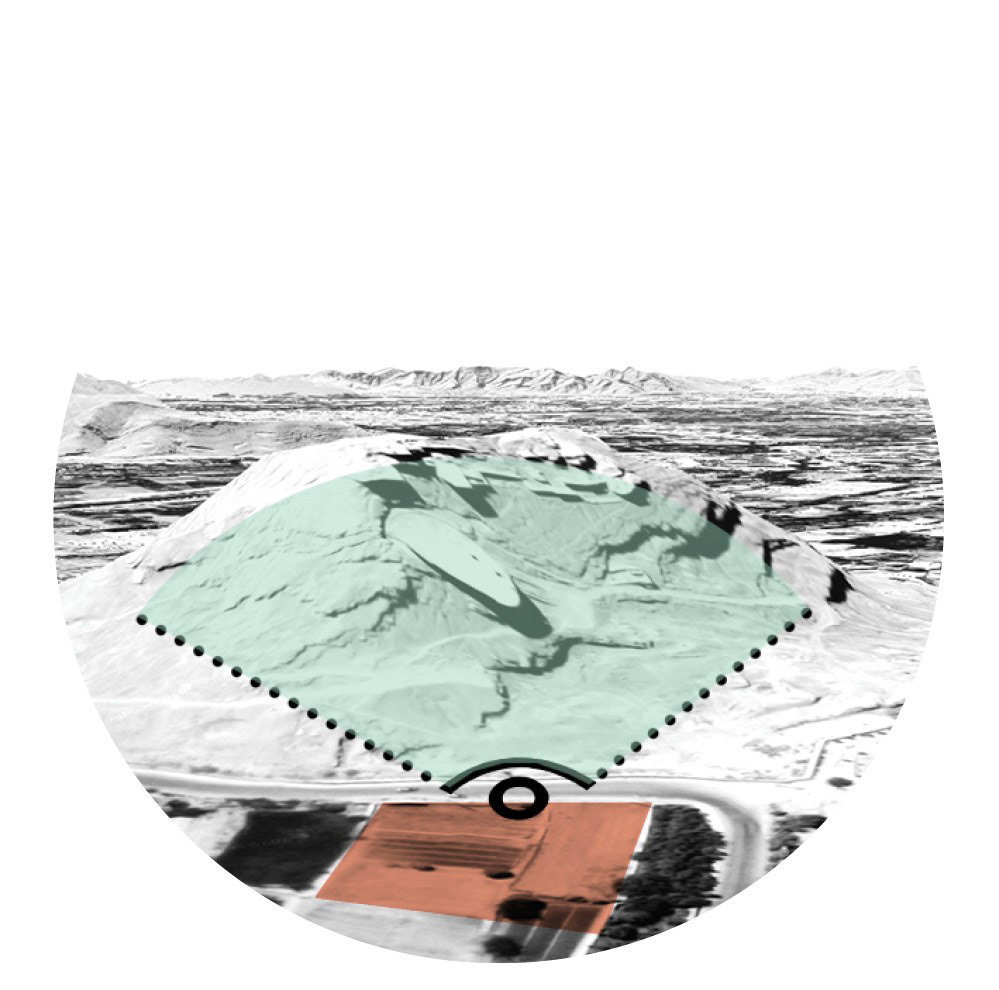
Collage process
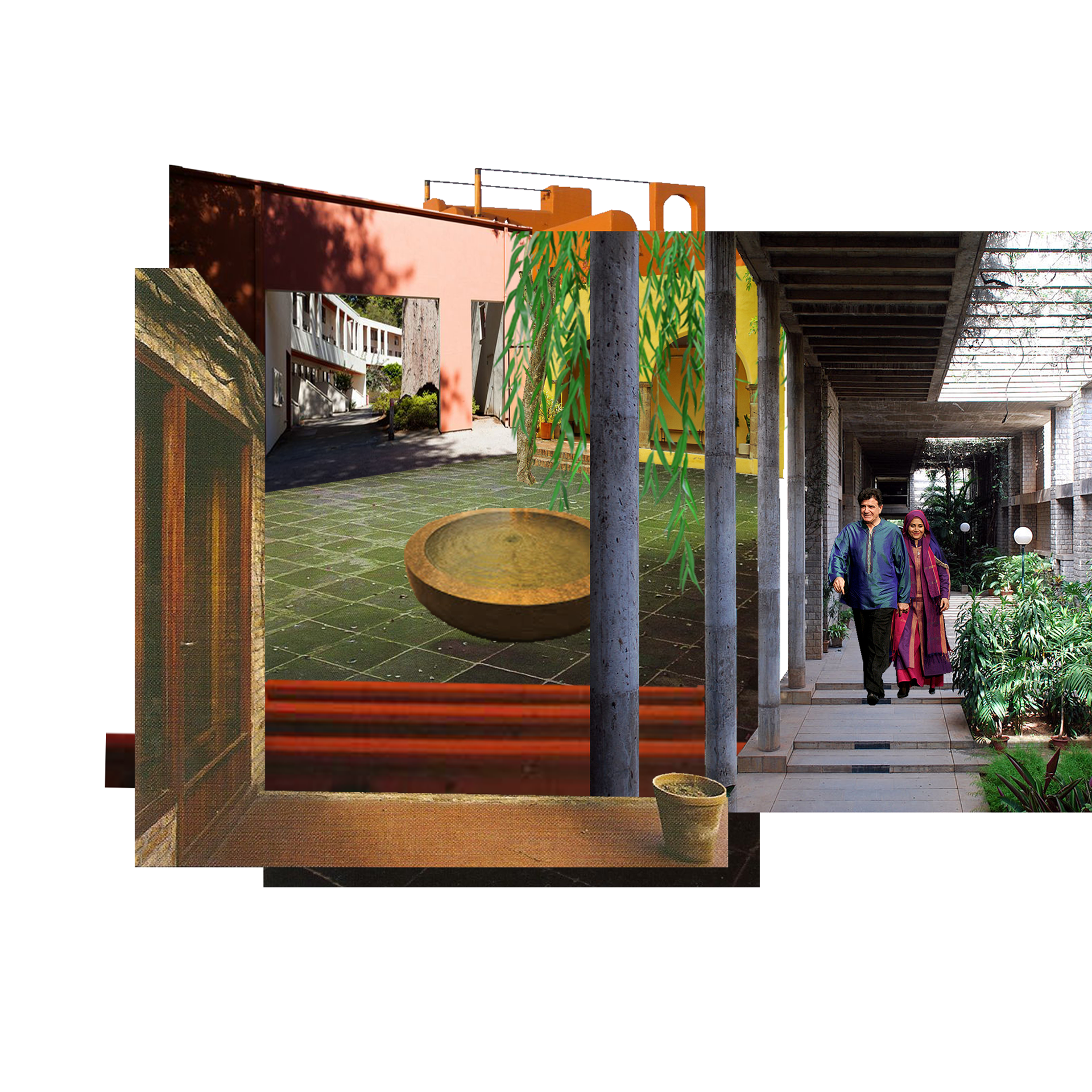
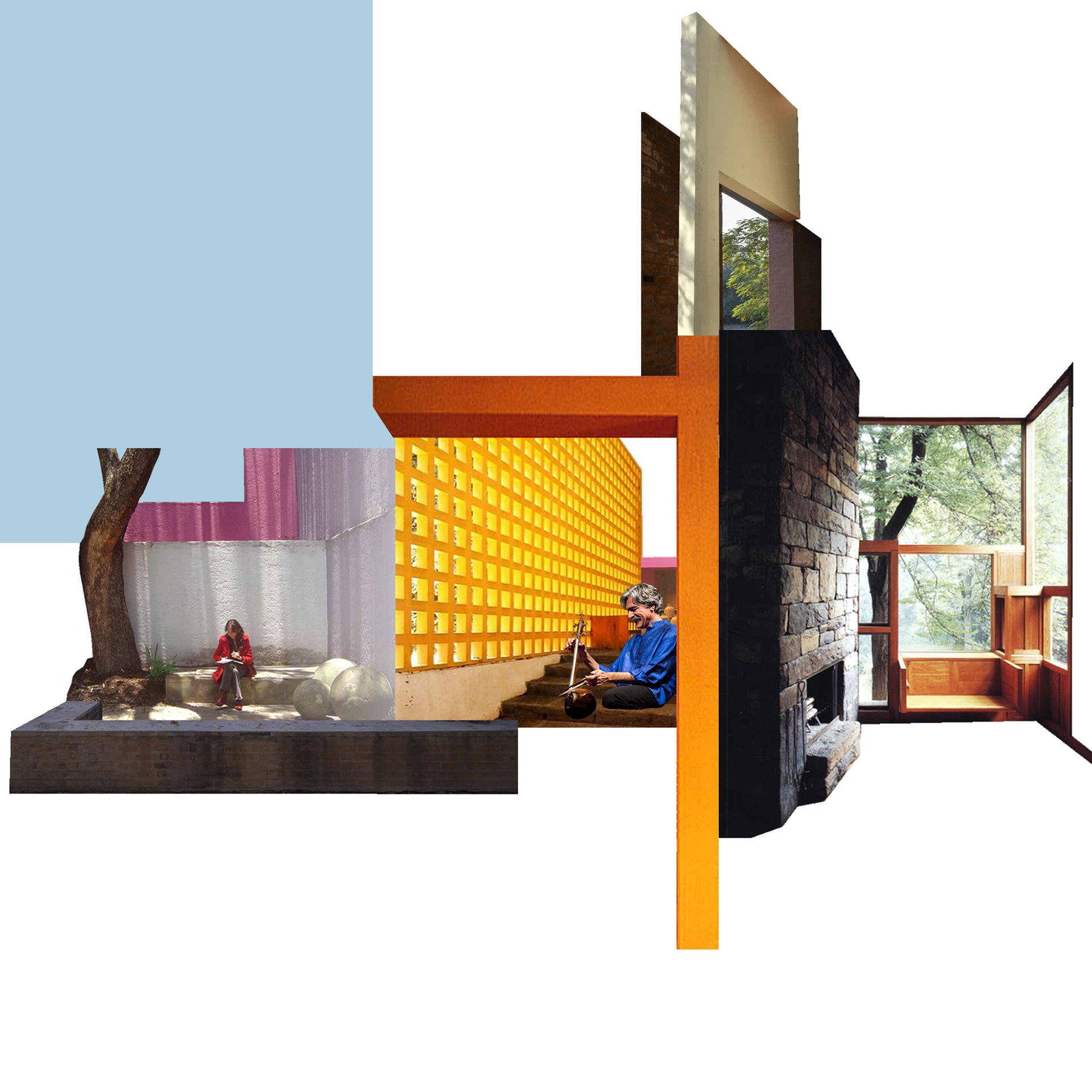
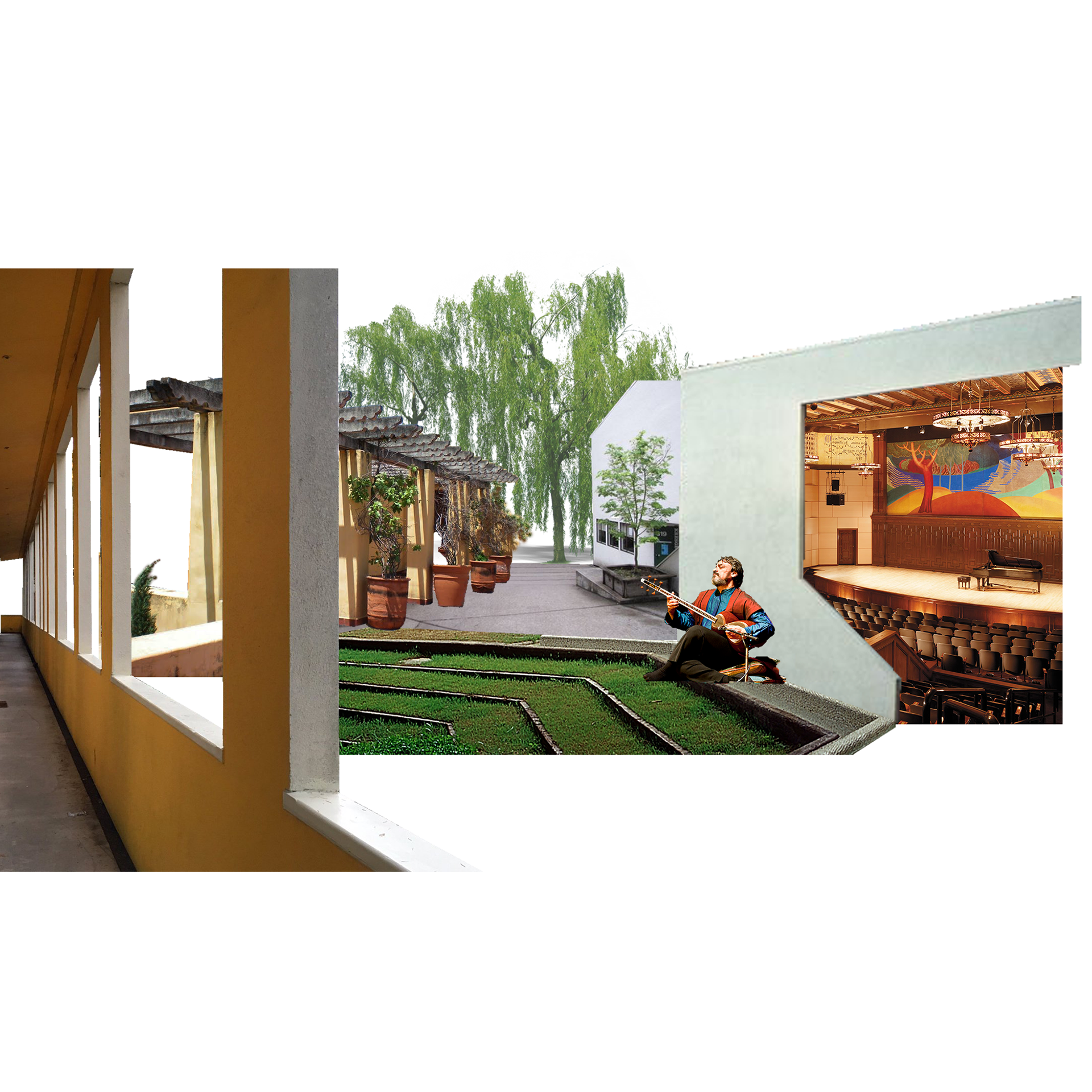
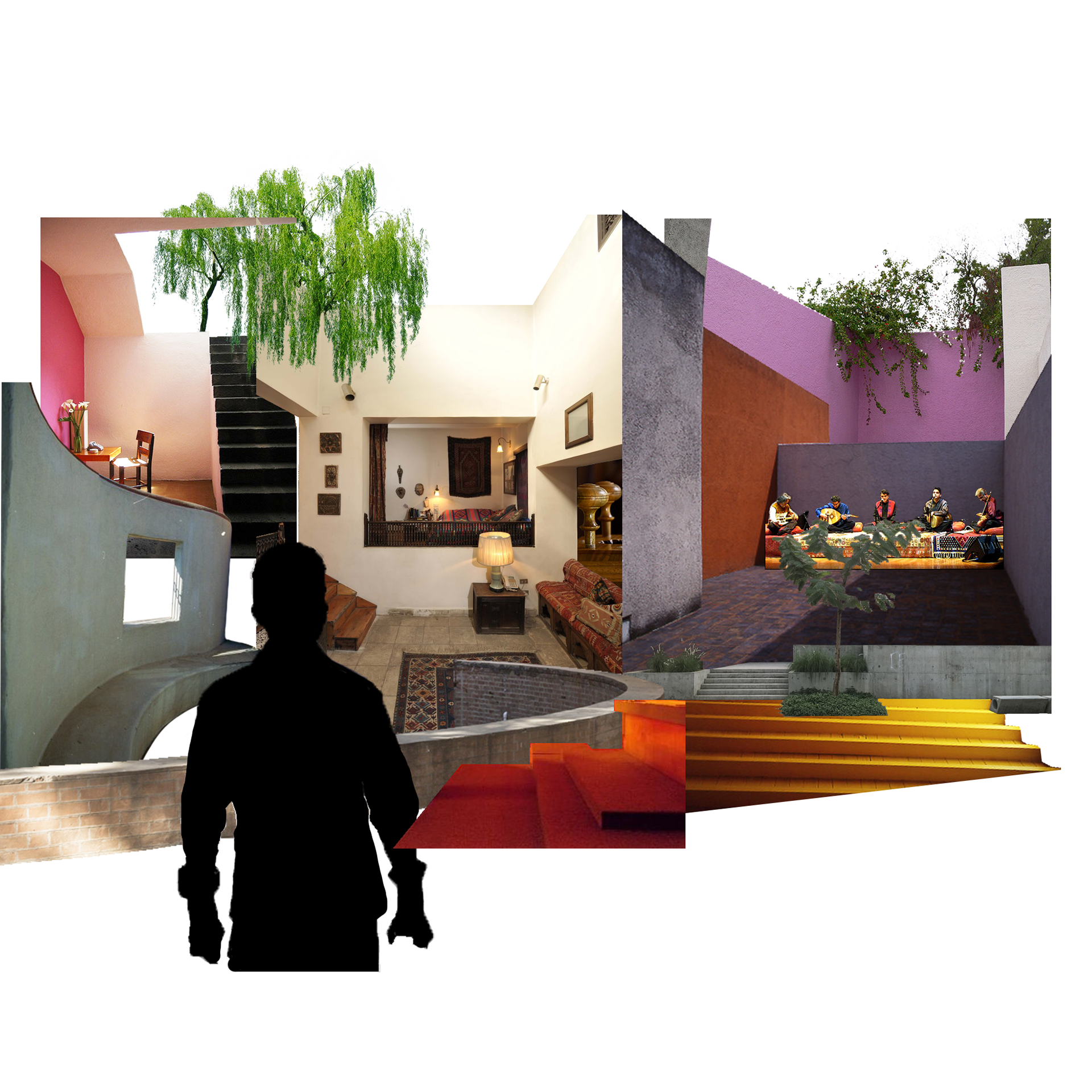
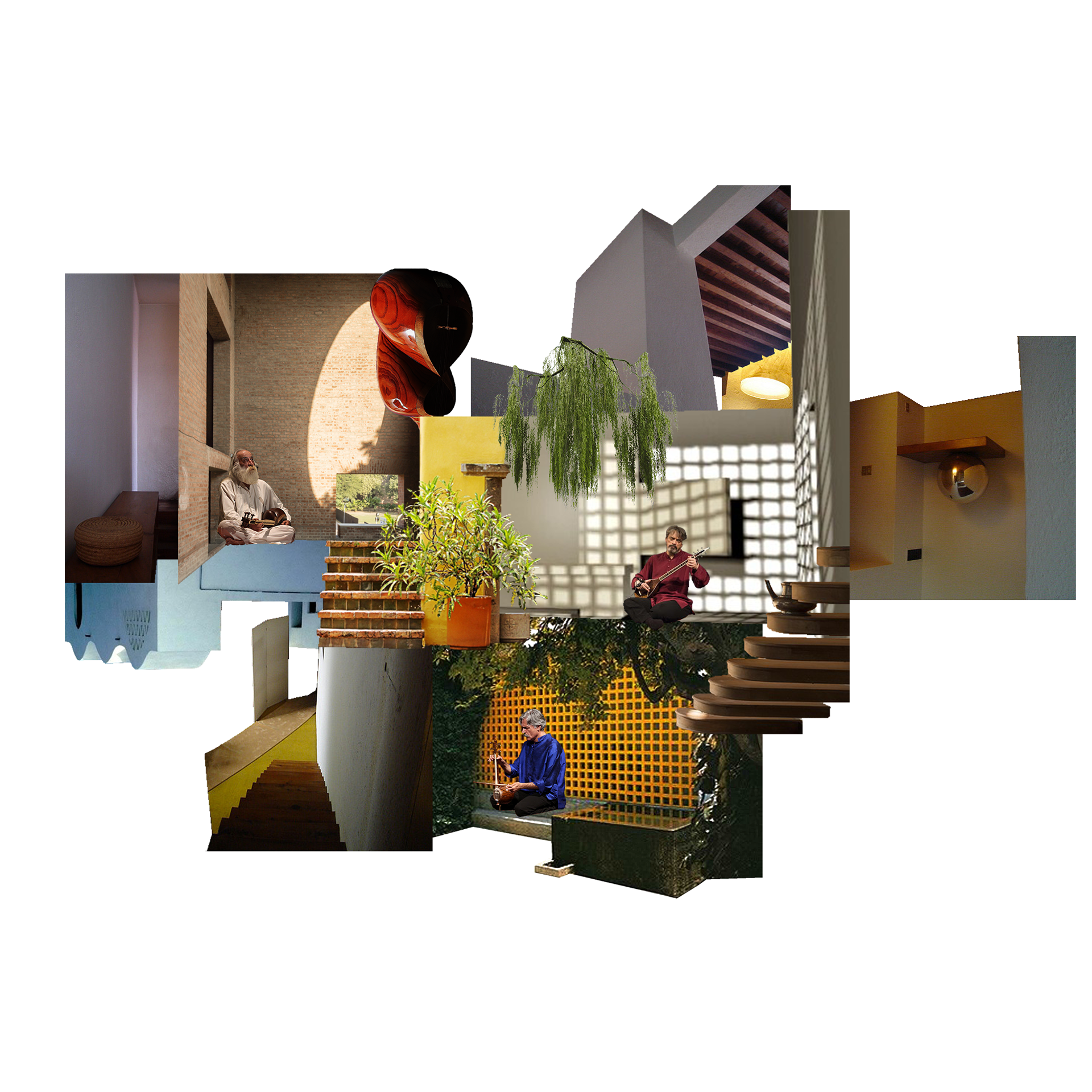
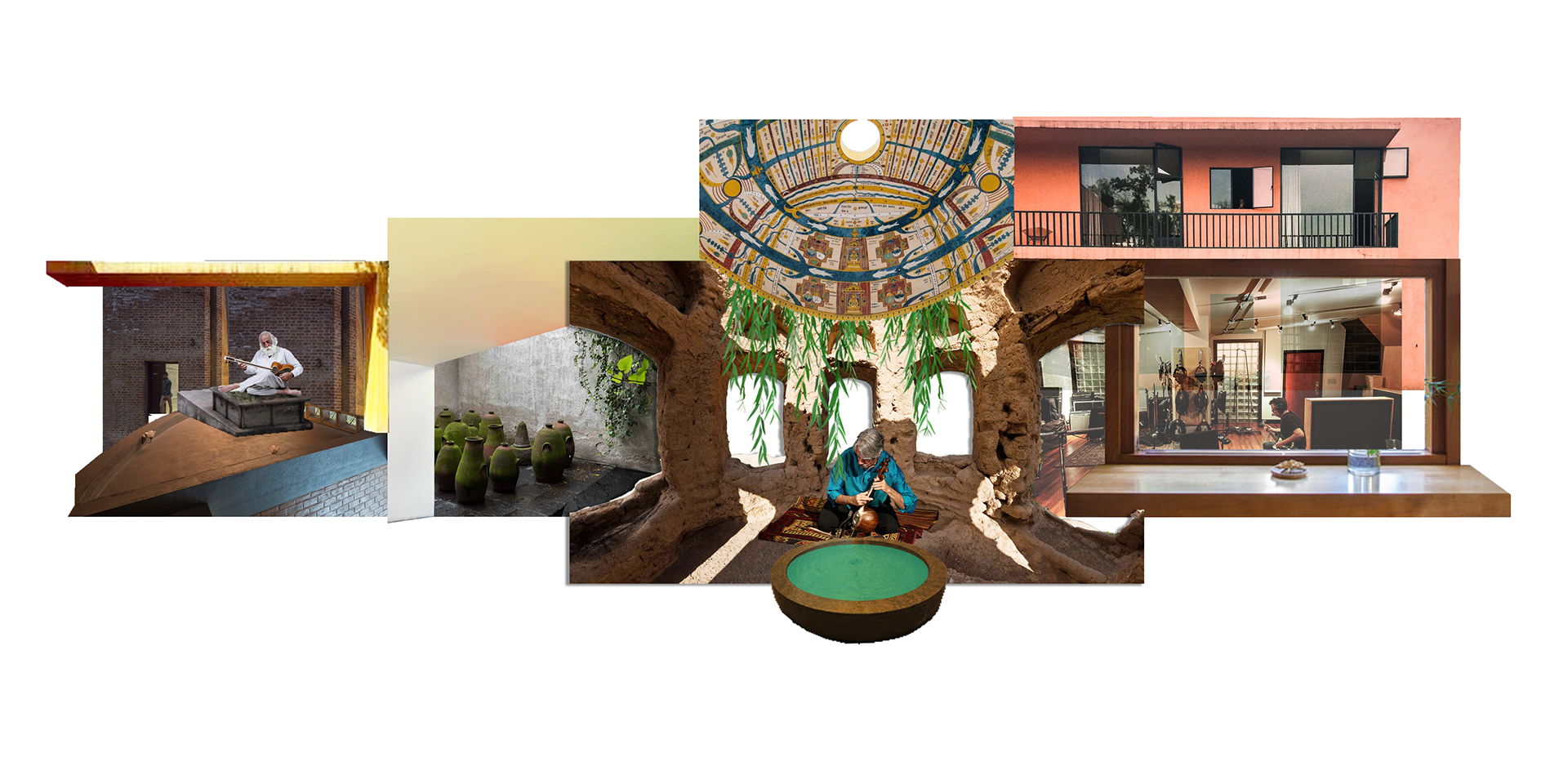
A series of pictures were chosen based on their colors, light, and shadows. Among these pictures were some depicting Iranian architectural elements such as courtyards, passageways (Dalaan), balconies (Ivan), and more. Greenery, water, and various materials were also present in them. These pictures were then put together in the form of collages.
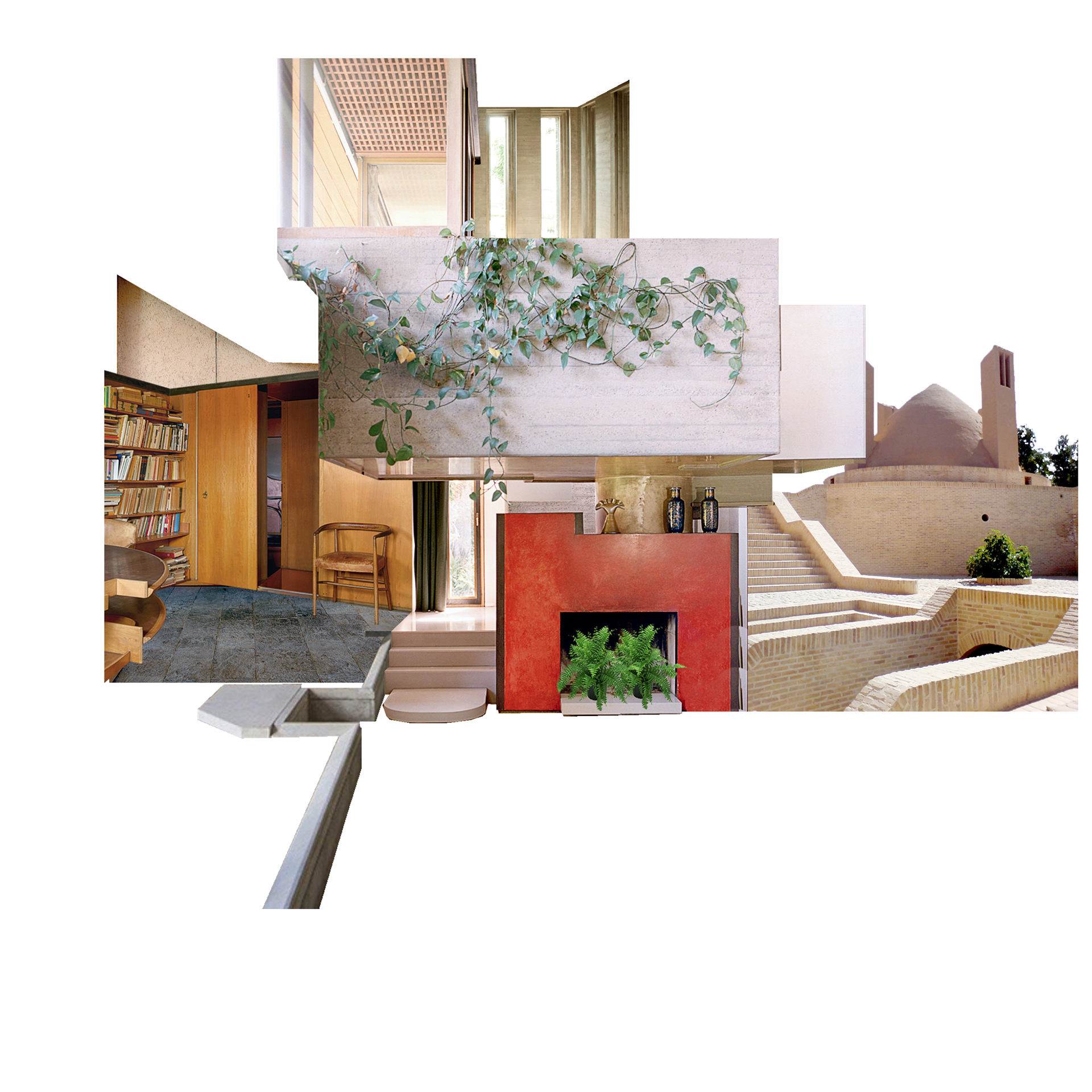
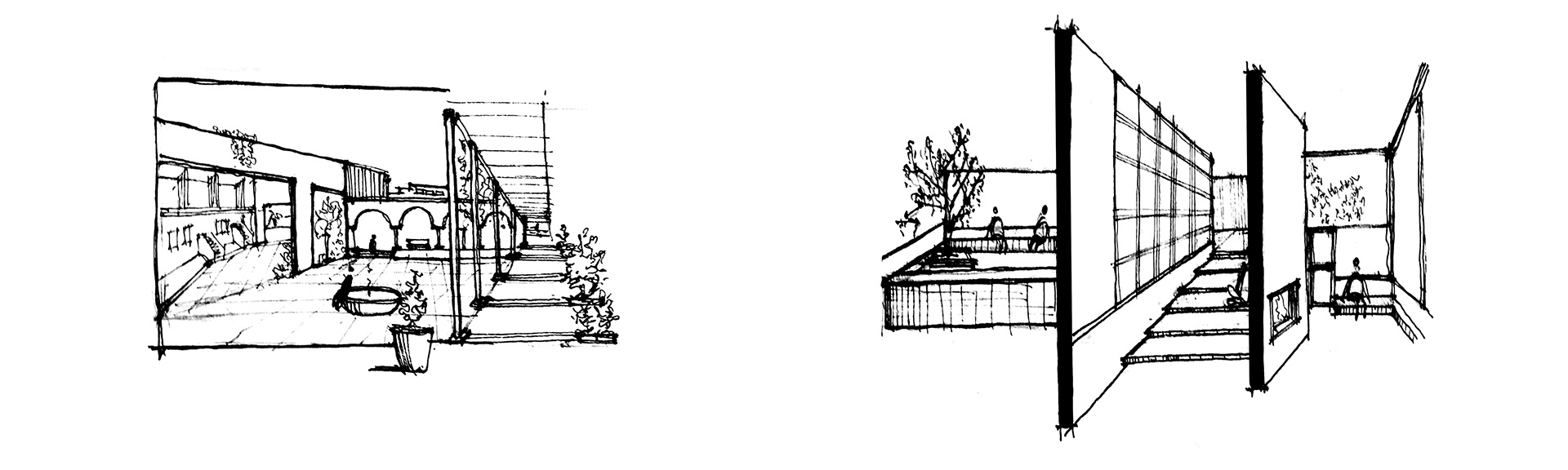
Sectional collages
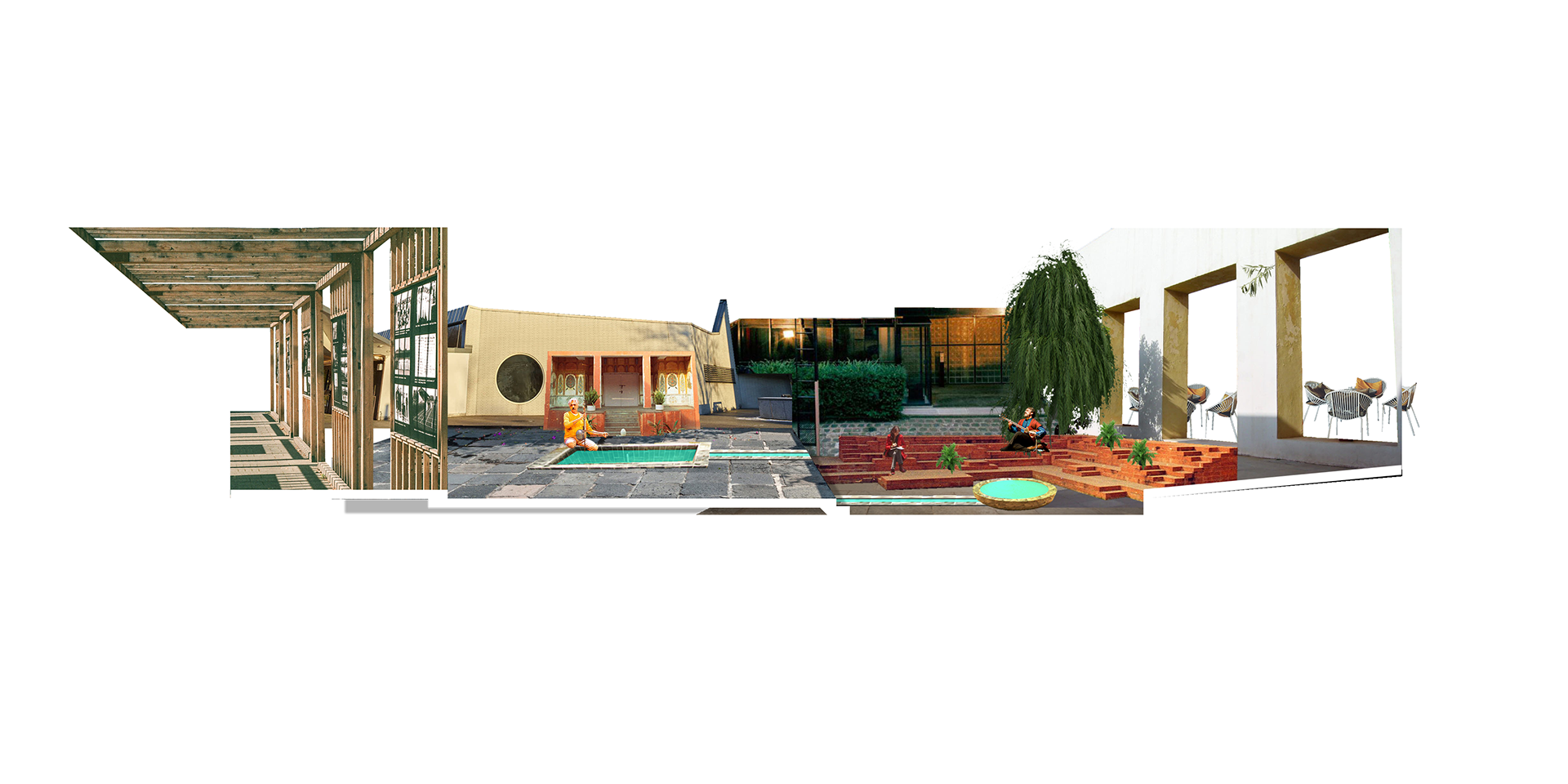
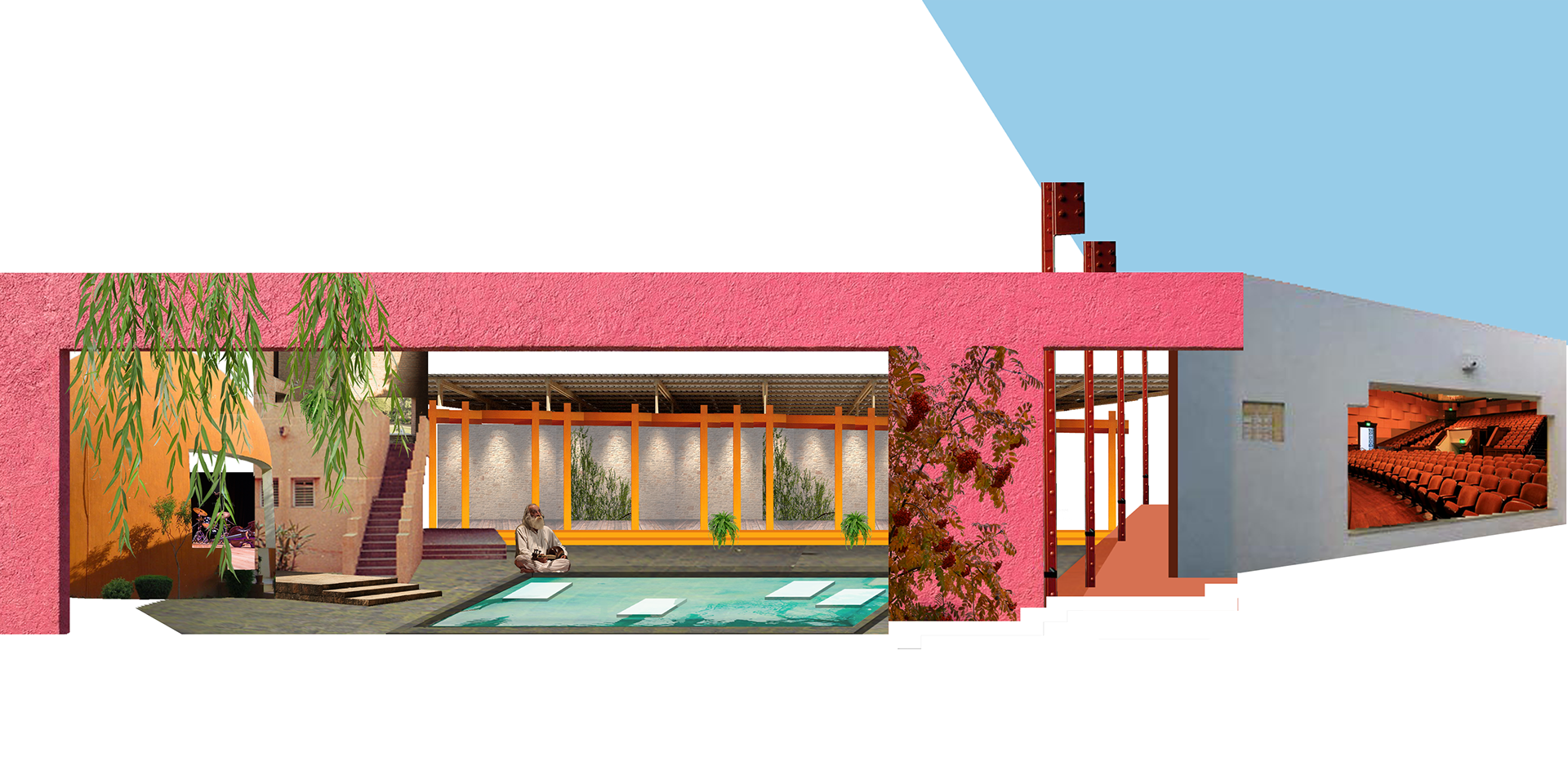
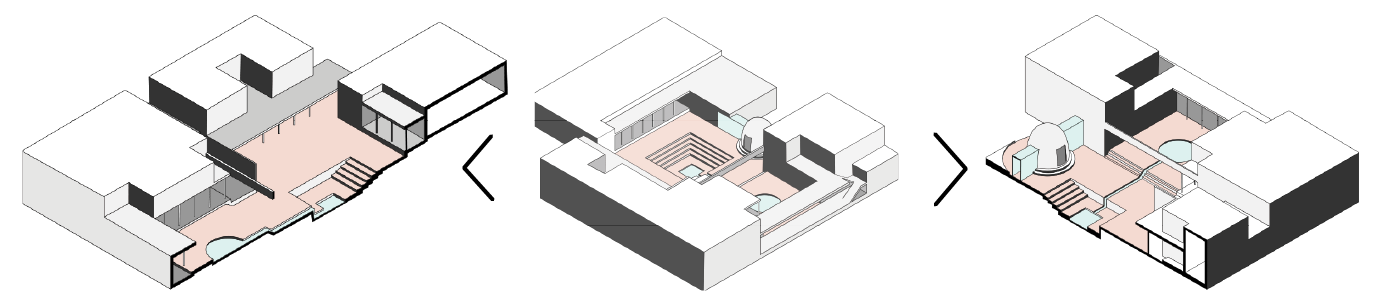
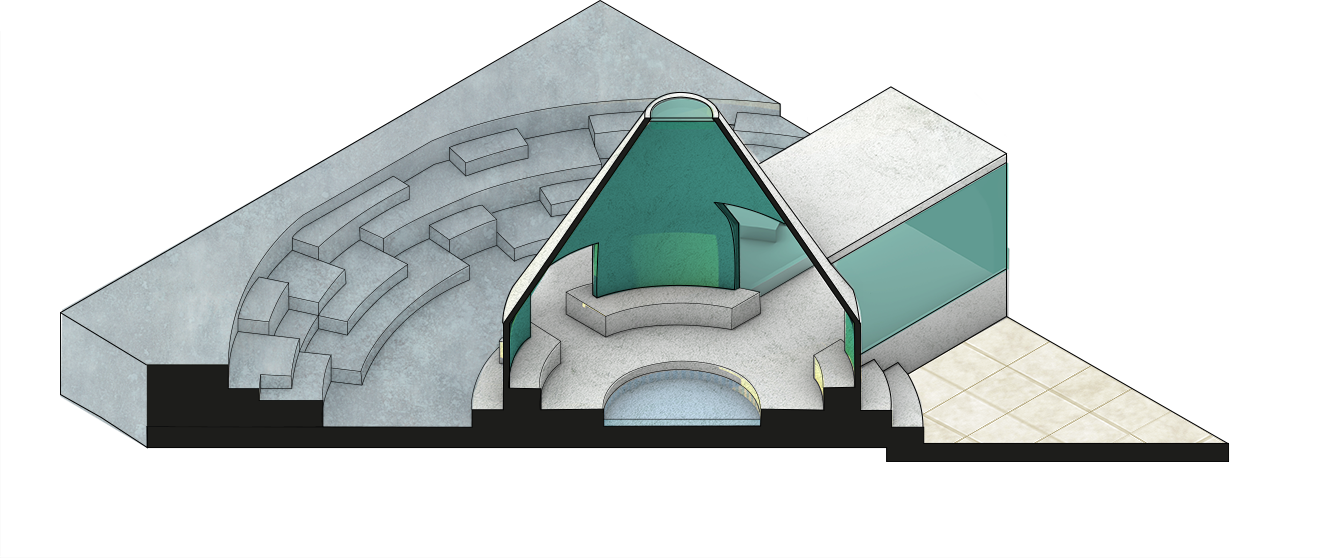
Three sectional collages were created by analyzing the previous ones. These collages helped to identify the hierarchy of spaces, organize the basic volumes, and develop an initial concept for the overall shape of the Music House.
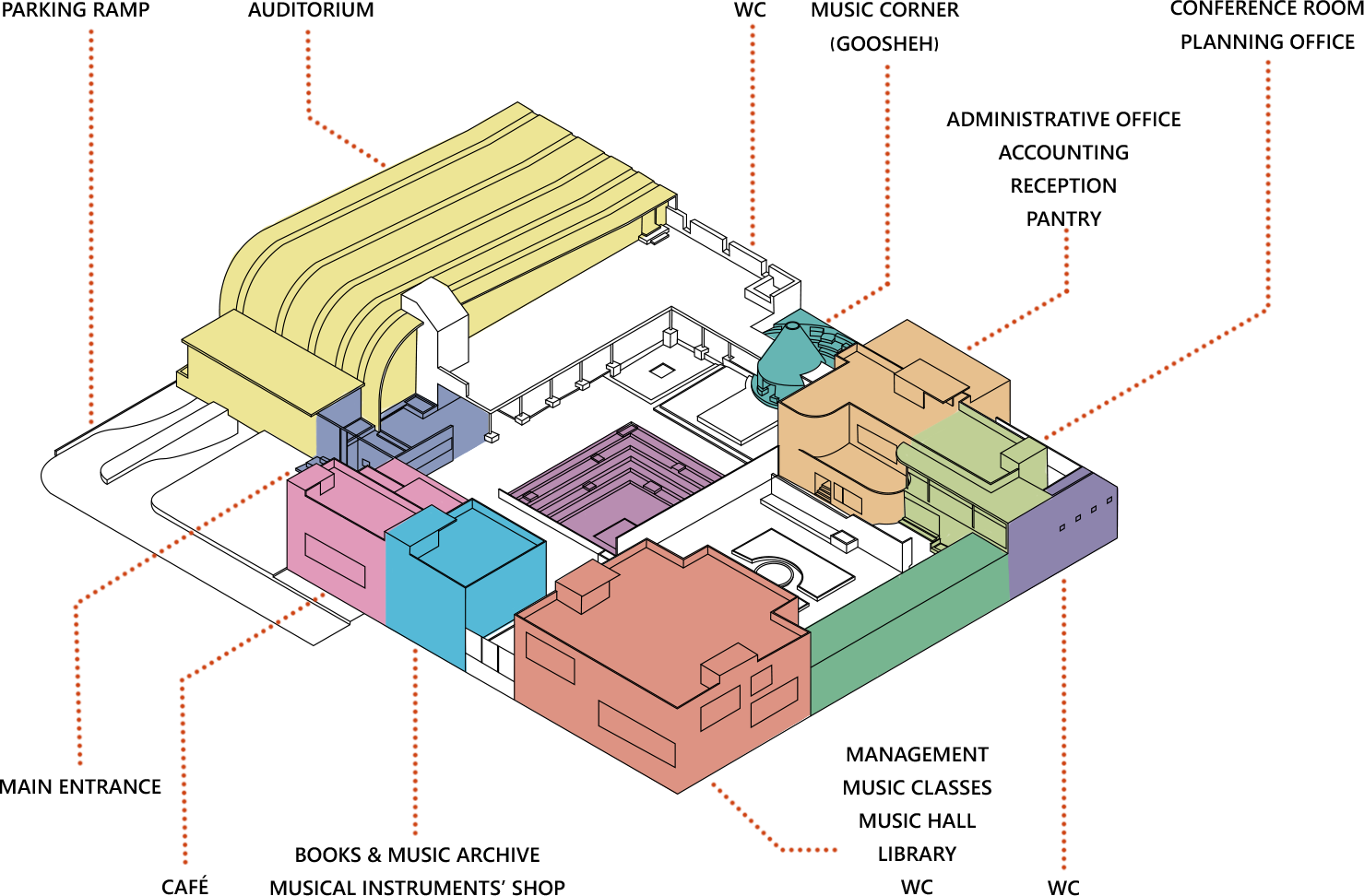
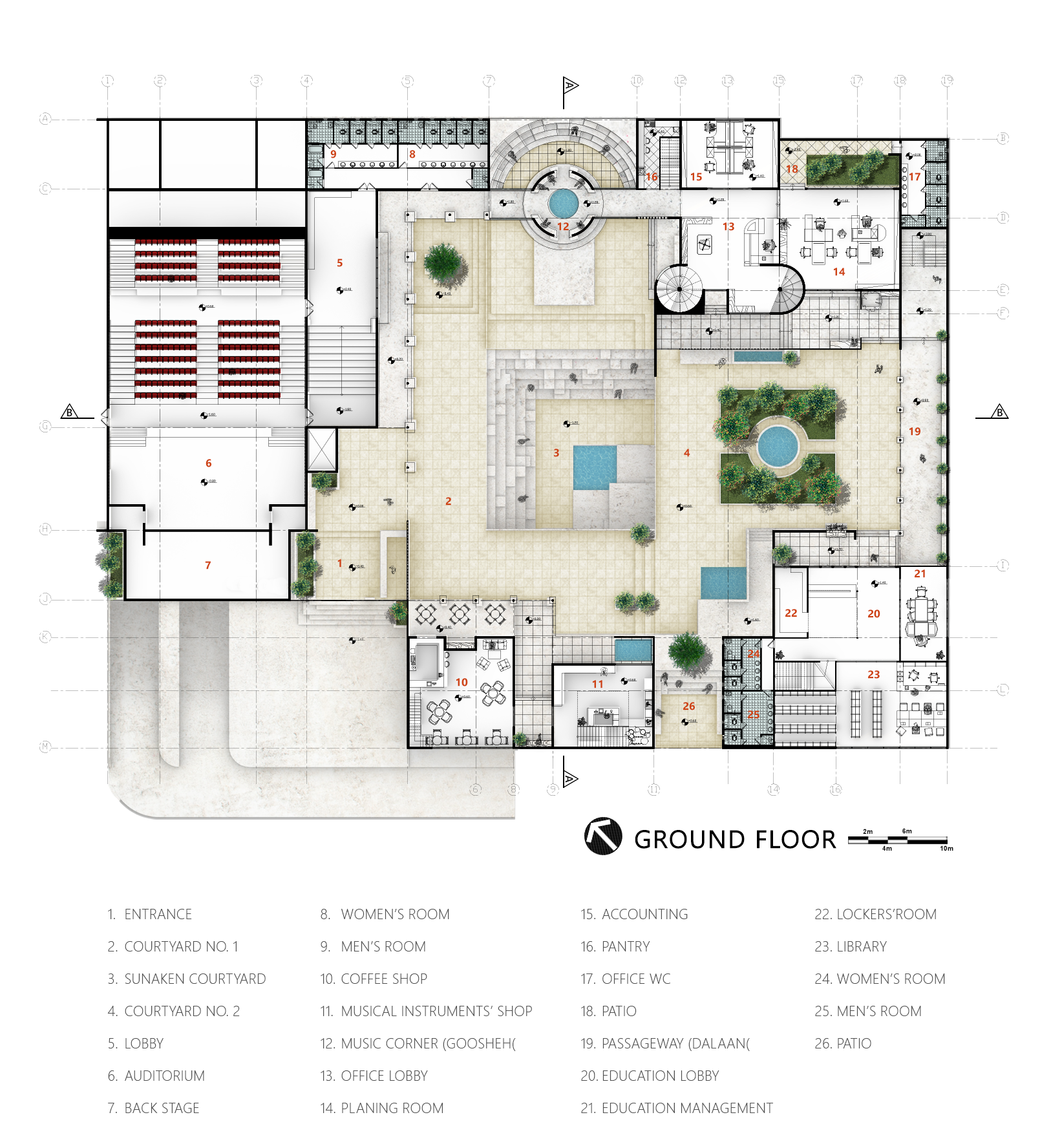
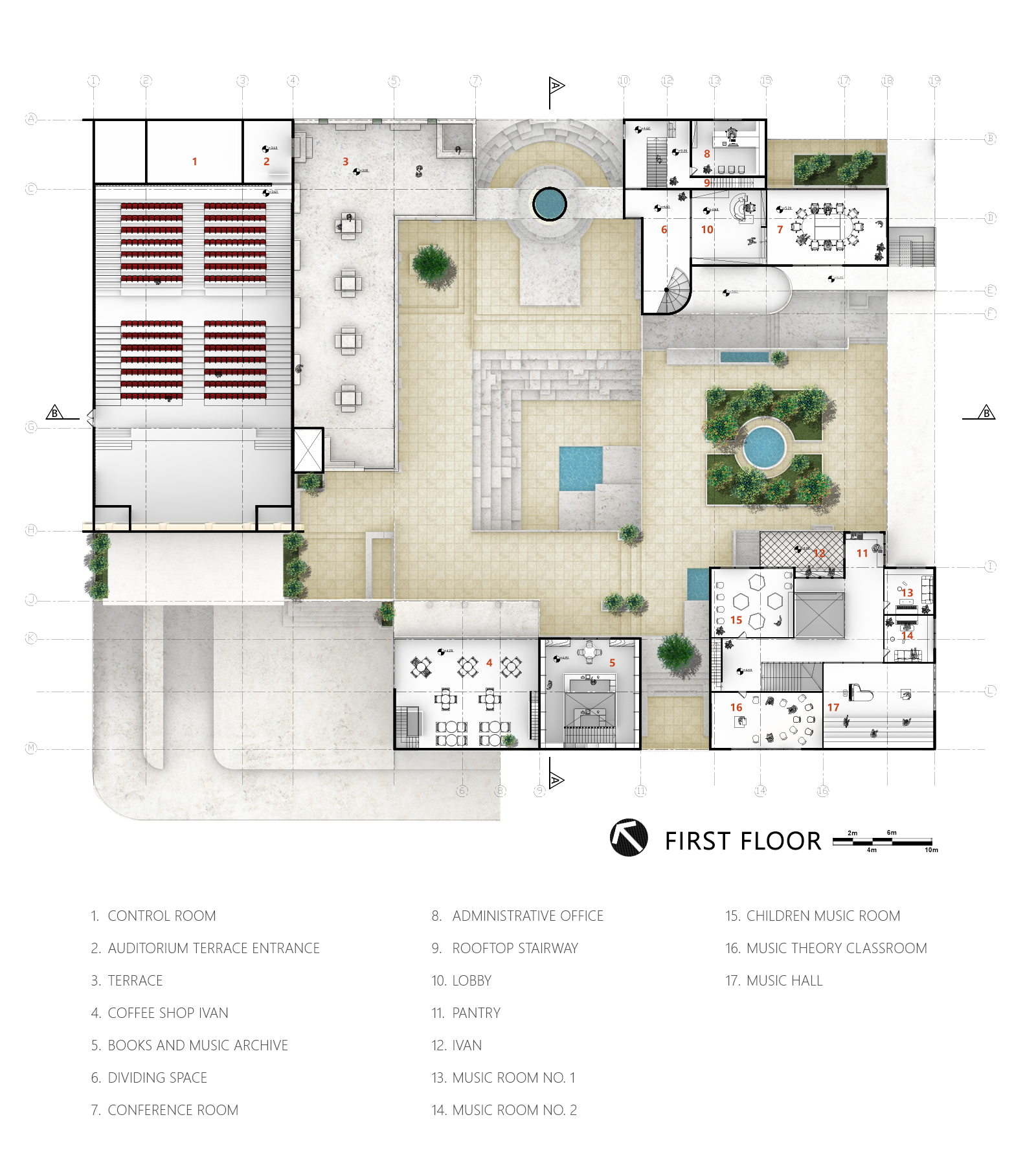
1. entrance
2. courtyard no. 1
3. sunken courtyard
4. courtyard no. 2
5. lobby
6. auditorium
7. backstage
8. women’s room
9. men’s room
10. coffee shop
11. musical instruments’ shop
12. music corner (goosheh)
13. office lobby
14. planing room
15. accounting
16. pantry
17. office WC
18. patio
19. passageway (dalaan)
20. education lobby
21. education management
22. locker room
23. library
24. women’s room
25. men’s room
26. patio
Plans
Sections

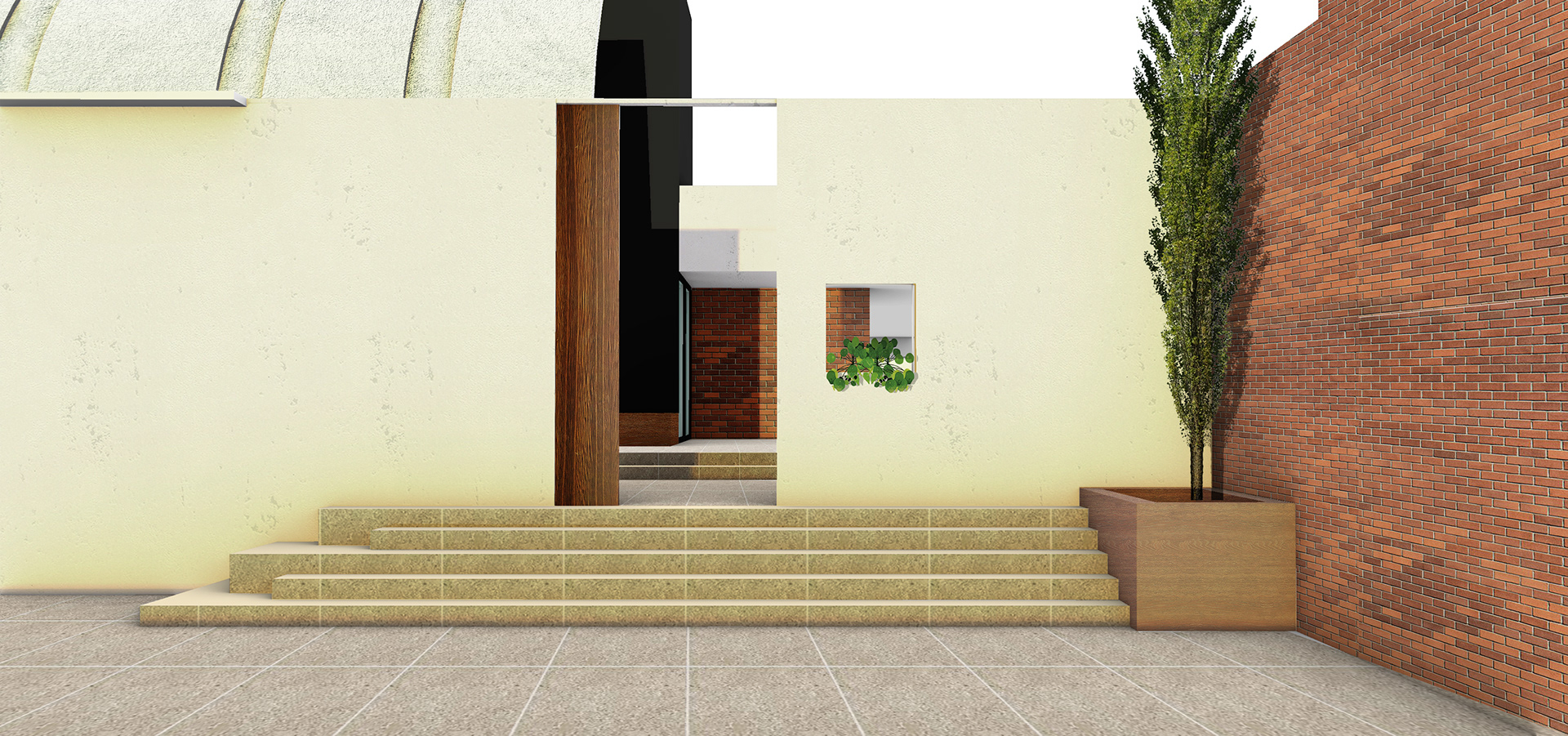
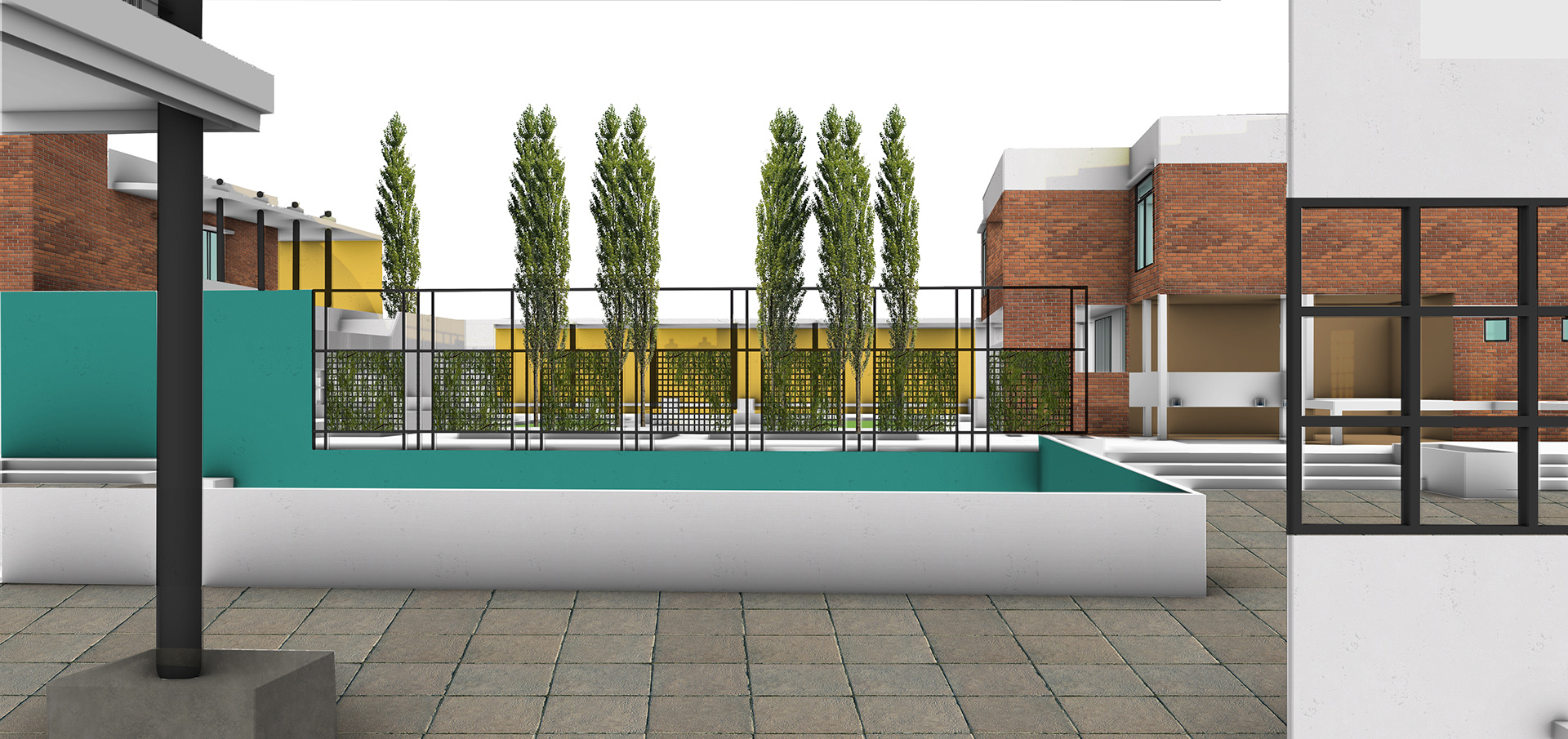
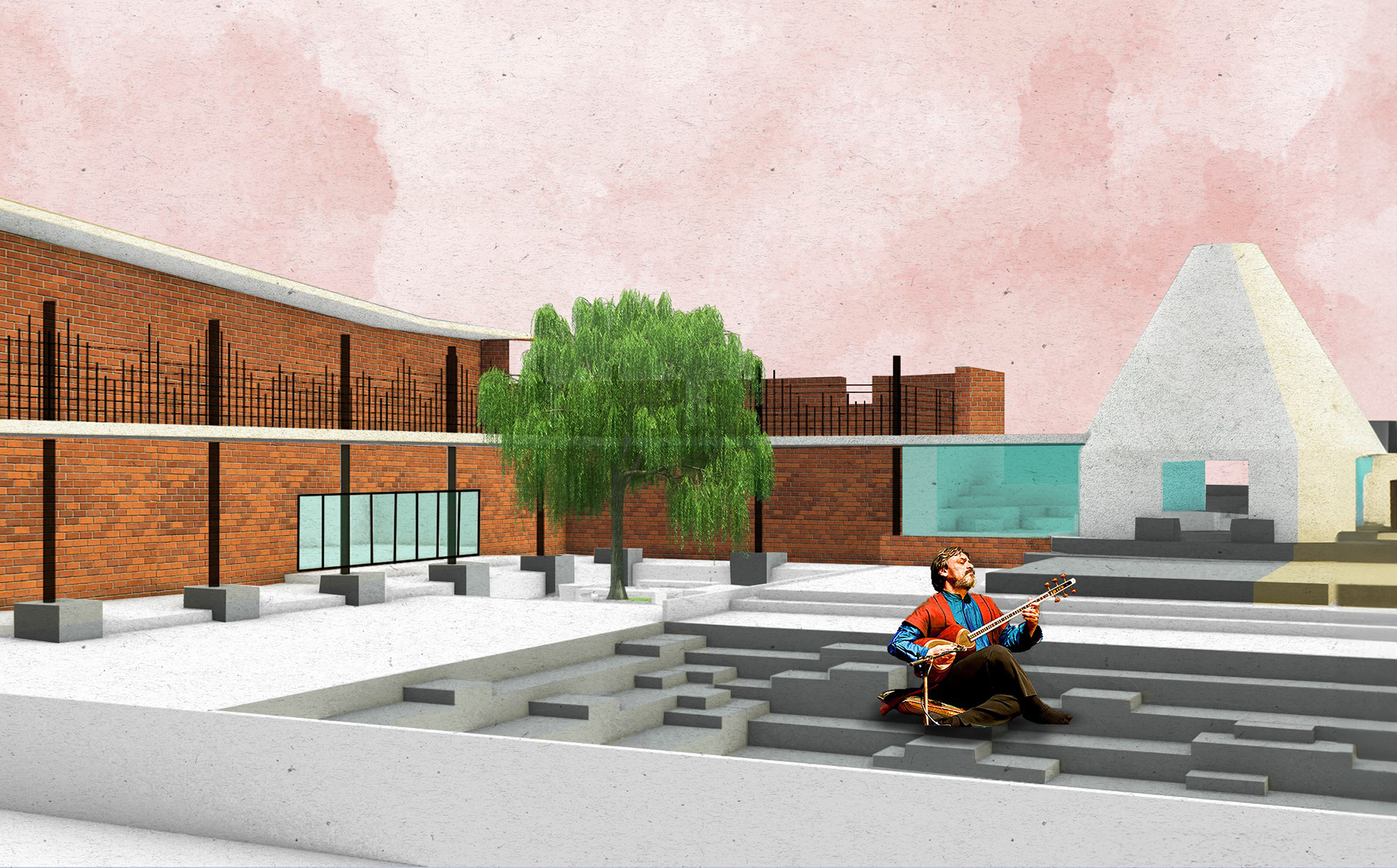
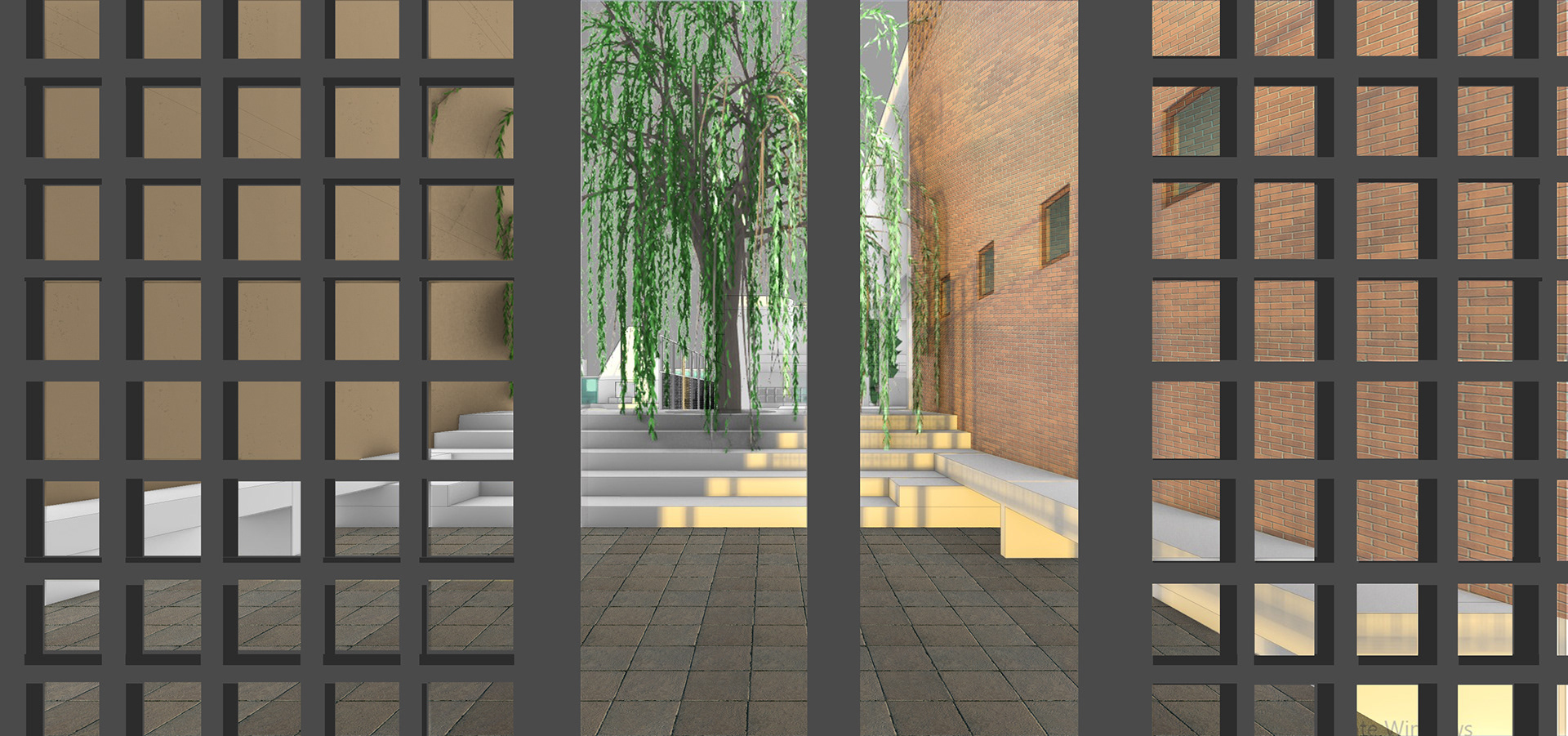
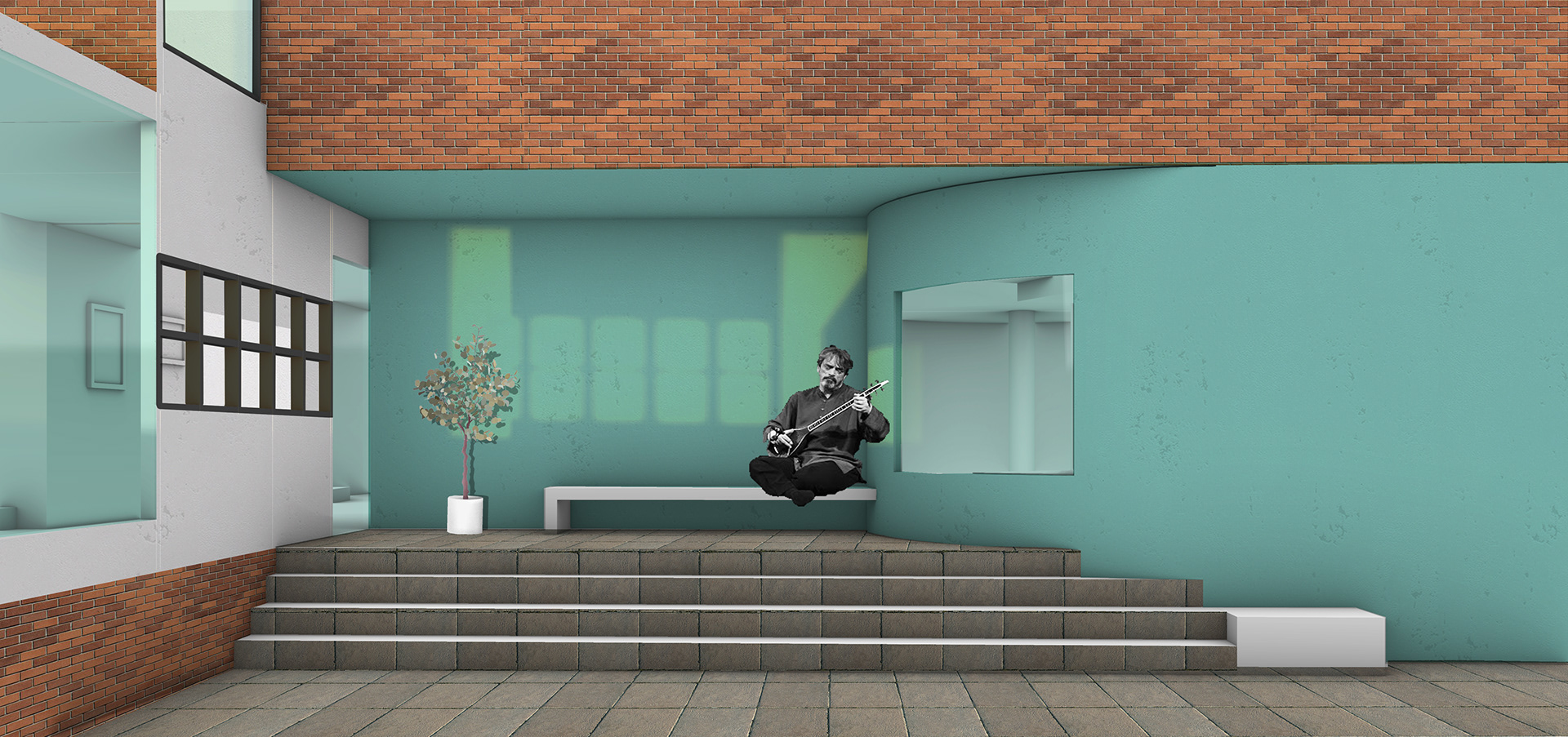
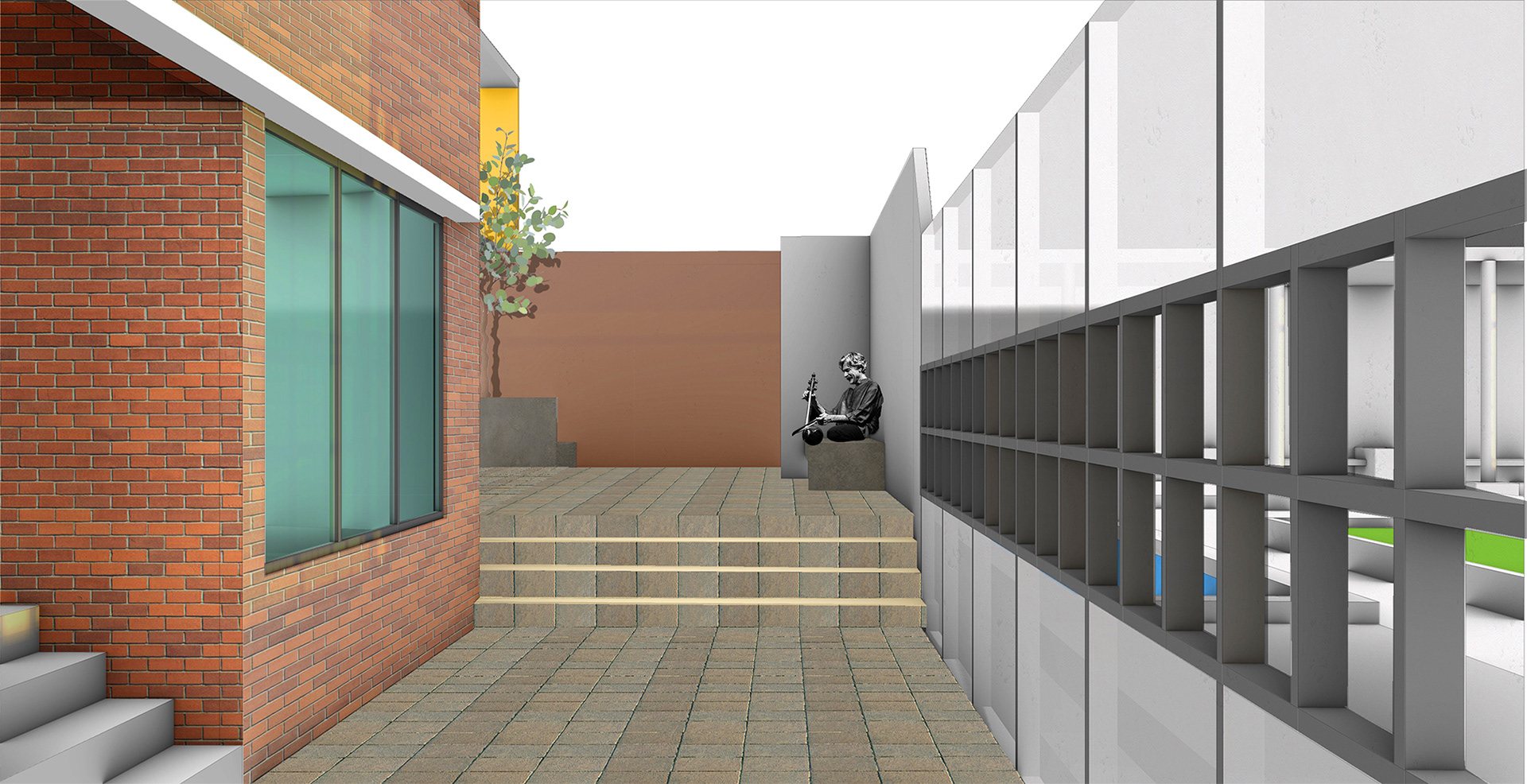
Based on collage no. 1, this corridor is a semi-open and transparent space between the courtyard and interior spaces, indicating a hierarchy in entering the office building from the open space of the courtyard. It also provides corners where the user has control over how they spend their time.
I work across architecture, scenography, and design. I'm interested in how people experience space, especially in cities, and how stories can change the way a place is perceived. For me, projects are often a way to investigate a question and understand a subject rather than arrive at a fixed answer.